










Whatever It Takes
 Watch the trailer
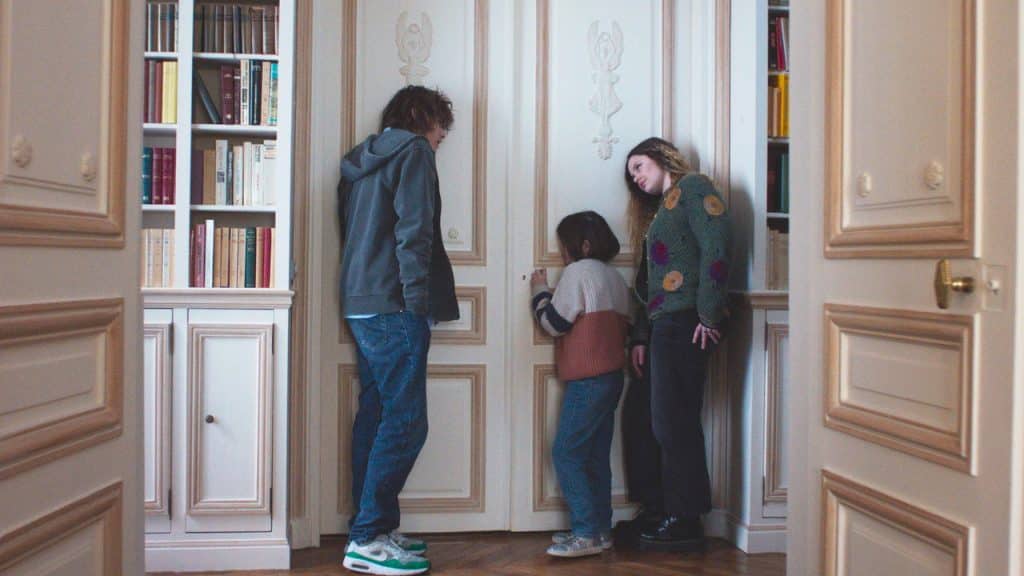
 Rose lives in a disused hotel with her three children — temporarily, or so she says. There's no money, but she meets every difficulty with the same disarming cheer and a healthy dose of self-deception. Jean is in his thirties, lives alone, and has deliberately shut the outside world out. The two meet under the strangest possible circumstances, and something between them starts to work: against his will, Jean gets drawn into Rose's schemes and grows fond of her three teenagers. As they gradually assemble into something like a family, it becomes clear how much is cracking underneath Rose's good humour.
For Léonetti this is a sharp turn. His first film, Carré blanc (2011), was a cold dystopia; Return to Sender (2015) was an American thriller starring Rosamund Pike. This one wears almost no genre armour at all: a human-scale story observed at close range, which he also wrote. David Nissen shot it, and the score is by Fred Avril and — unusually — by Pierre Lottin, who plays the lead.
Sandrine Kiberlain plays Rose and Pierre Lottin plays Jean, best known here from the Les Tuche films, The Marching Band and Ozon's The Stranger, for which he won the César for Best Supporting Actor. The three children are played by Louise Labèque, Alexis Rosenstiehl and Alma Ngoc.
French critics were divided: the average across nineteen outlets sits mid-range, and several reviewers found the story's frame predictable and the ending manipulative. What almost everyone agreed on were the two leads — La Voix du Nord called them "one of the most cheering mismatched duos we've seen on screen in a long time," and Télérama described the film as "a successful comedy with an unexpected outcome."
→ The film on IMDb